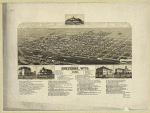
Above: A layout of Cheyenne, Wyoming, dated around 1883. Cheyenne was one of the many western towns that the railroad
stopped at along the route.
For several decades before the railroad, people had been emigrating to the West. Thanks to the railroad, this
emigration was made much easier. People no longer had to travel by the inconvenient means of covered wagon,
stagecoach, handcart, walking, and horseback and could instead rely on a much faster and easier mode of travel.
A cross-country trip that could be taken in as long as two months by stagecoach could be done in the short space of
five days.
Obviously, this meant that settling the west would be much easier. The population for some western states
shows this. Utah, for example went from about 40,000 people in 1860 to over 140,000 in 1880. To avoid possible
bias, several more states' populations are provided, rounded to the nearest thousand :
Nevada Note: keep in mind that the railroad was
In 1860: 7,000 completed in 1869.
In 1880: 62,000
Wyoming
In 1870 (first available census, and only one year after the railroad began service): 9,000
In 1880: 21,000
And finally, Nebraska
In 1860: 29,000
In 1880: 462,000
These statistics provide a very convincing before/after picture of the effects on the population of the western
United States because of the transcontinental railroad.
